
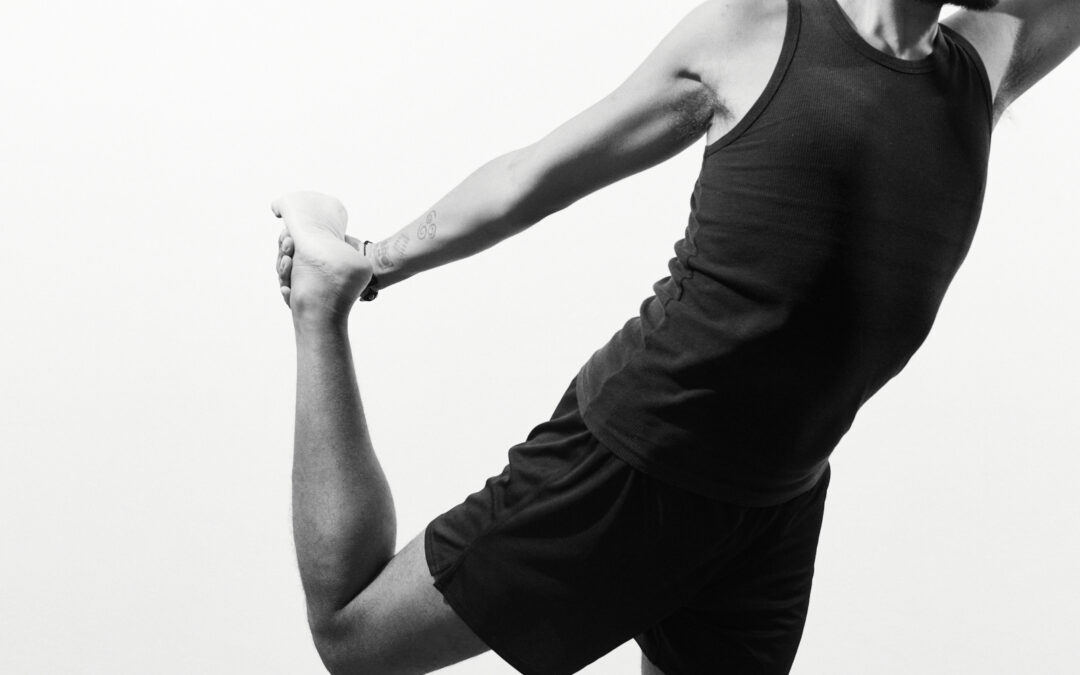
शिवोऽहम्
Śivo’ham
Śivaḥ + aham becomes Śivo’ham.
Śiva means the auspicious one, pure consciousness. Aham means I am. So when we say “Śivo’ham,” it translates to “I am Śiva” or “I am pure consciousness.” We are not claiming to be a god; it is the deepest Self recognizing its true nature. The idea comes from the non-dual wisdom of the Upanishads and the great mahāvākyas (great sayings) like “Aham Brahmāsmi” (I Am Brahman) from the Brihadaranyaka Upanishad and “Tat Tvam Asi” (That Thou Art) from the Chandogya Upanishad. In Advaita Vedanta, this expresses the realization that Ātman and Brahman are not separate. Your deepest essence is already whole, already conscious, already free.
When we look at Yoga and Ayurveda through this lens, we can say they are both really about Śiva – about transformation. In the Śaiva understanding, Śiva represents the principle of dissolution and renewal. Not destruction in a negative sense, but the dissolving of ignorance, outdated patterns, and ego-attachments so that something clearer and more truthful can emerge. Every time you step on your mat and let go of tension, comparison, or frustration, you are embodying that Śiva principle.
In the classical teachings of the Yoga Sutras of Patanjali, Yoga is about transforming the mind. Through abhyāsa, steady practice, and vairāgya, non-attachment, we begin to refine our saṃskāras, those habitual patterns that shape how we react to life. Yoga helps us digest mental and emotional “toxins” like fear, anger, jealousy, and self-doubt. It clears space so that clarity, wisdom and joy can arise naturally.
Ayurveda works with the transformation of the body. Agni, our digestive and metabolic fire, is not only for digesting food but also for processing experiences. When agni is weak, ama, toxins, accumulate – physically or mentally. When agni is balanced, we feel light, clear, and energized. Health in Ayurveda can be called sama doṣa, the harmonious balance of Vāta, Pitta, and Kapha.
The chariot metaphor from the Katha Upanishad can bring some understanding. Imagine Kapha as the structure of the chariot – stability and strength. Vāta is the horses – movement and impulse. Pitta is the driver – discernment and direction. Without Kapha, there is no steady vehicle. Without Vāta, nothing moves. Without Pitta, there is no intelligent guidance. And Yoga cultivates the higher awareness that wisely directs these elements.
We can see this every day in class. During Sūrya Namaskār, some of us want to rush and move quickly – that might be Vāta. Some push hard, heat up, and strive – that could be Pitta. Others move slowly or feel heavy and sleepy in Śavāsana – this is Kapha. None of this is wrong. It is simply information. When the doṣas are balanced, we can move dynamically, focus clearly, and rest deeply with equal enjoyment. Meditation, chanting, prāņāyāma, and conscious movement help harmonize all three.
Our lifestyle choices can influence the Dośas. Food directly influences our constitution and our agni. A predominantly whole-food, vegan orientation tends to be lighter and easier to digest, supporting clarity and reducing ama (toxins). Warm, nourishing plant foods can ground Vāta. Fresh, cooling meals can soothe excess Pitta. Light, fiber-rich foods can uplift Kapha without heaviness. Such habits not only support energetic balance but also cardiovascular health, helping reduce risk factors for diet related diseases. In this way, conscious consumption becomes part of our spiritual practice – not only to balance our body and mind, but also to express the love and compassion that yoga always teaches us to embody. We can never be truly happy while intentionally causing suffering to other beings, especially when we have the choice not to. In yoga, causing suffering to another being is the same as causing suffering to oneself.
Imagine that Ayurveda is giving us the roots – a balanced, resilient body. Yoga gives us the trunk and branches – direction, expansion, and purpose. Together they express the same principle: conscious transformation. They help us clear what no longer serves us and prevent it from building up again.
Happiness, health, and liberation are not something we chase outside ourselves, but something we uncover by refining body and mind.
Ayurveda teaches us how to have a long and healthy life. Yoga teaches us how to efficiently use this long, healthy life to attain happiness and enlightenment. In other words, Ayurveda gives us a healthy body and Yoga gives us a reason to live. – Sharon Gannon
So when we say Śivo’ham, it means that beneath the fluctuations, beneath the imbalances, beneath the busy mind, our true nature is already pure consciousness. Yoga and Ayurveda simply help us remember.
- From the Chandogya Upanishad
Once, a young disciple approached his teacher and asked, “Master, how can I understand the nature of the Self? What is it, and how do I realize it?” The teacher, wise and calm, smiled and said, “I will give you an experience to understand it.”
He gave the disciple a small lump of salt and instructed him, “Take this salt and dissolve it in a bowl of water. Leave it there for a while, and then return to me.” The disciple did as he was told. He dissolved the salt in the water and left the bowl by the side. When he returned, the teacher asked, “Now, taste the water.”
The disciple dipped his finger into the water and tasted it. “The water is salty,” he said.
“Can you see the salt?” the teacher asked.
“No,” replied the disciple, “The salt has completely dissolved, and I can no longer see it.”
The teacher smiled again and said, “Exactly. The salt has dissolved into the water, and its essence is now part of it. Just as the salt is inseparable from the water, so too is the Self (Atman) inseparable from the Supreme Reality (Brahman). The Self is everywhere and in everything, though it cannot always be directly seen. It is the essence that permeates all things, just as salt permeates the water.”
– Dean Galip